Multifactor authentication
To confirm the identity of customers, your application uses layers of authentication techniques to achieve any level of desired security. For example, you would allow lower security for a banking customer to confirm a payment and higher security to transfer funds to an external account. Because applications use more than one technique, this is known as multifactor authentication. Multifactor authentication is not a single feature but instead is an approach that combines mechanisms to confirm identities.
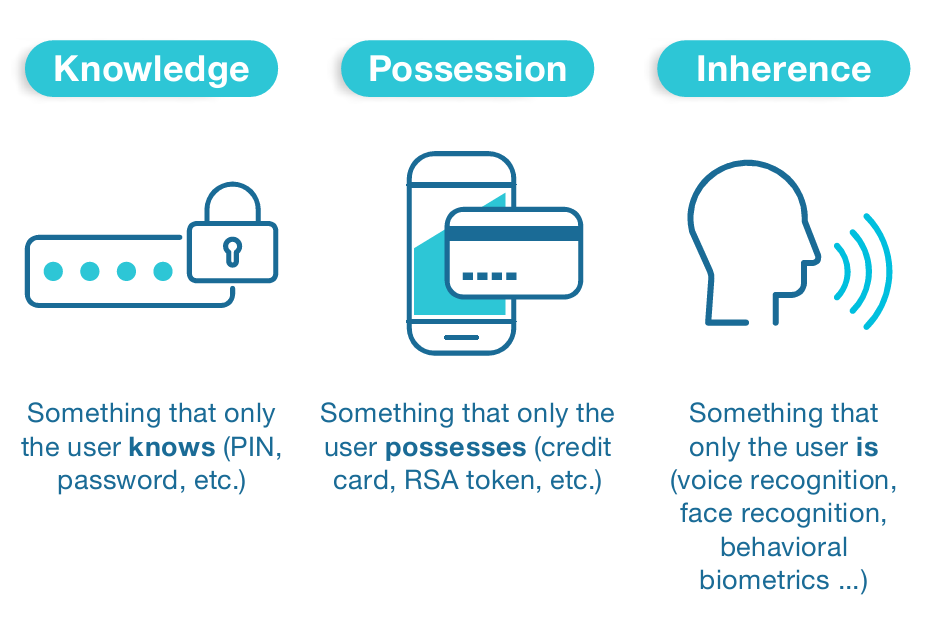
You can use multifactor authentication to grant access to users after they successfully present two or more pieces of evidence (or factors) to an authentication mechanism: knowledge (something the user and only the user knows), possession (something the user and only the user has), and inherence (something the user and only the user is).
Voice biometric characteristics
Authentication starts with the customer’s voice biometric characteristics, and the ability to use unique voice characteristics to authenticate the customer or to detect a known fraudster.
To know more about voice biometrics characteristics, see Voice biometrics.
Intelligent detectors
Intelligent detectors are authentication layers that consider characteristics of the whole call and sessions within the call.
The results of these assessments are communicated to your application (through the API) and to fraud analysts for post-call investigation (through the web applications).
Anti-spoofing
Another layer, referred to as anti-spoofing, consists of responses that counter the common ways that fraudster hack all of the above.
The anti-spoofing mechanisms prevent fraud and increase security through the following:
- Liveness identification: Ensures the subject providing the biometrics is a human.
- Synthetic speech identification: Detects machine-generated speech.
- Playback identification: Detects a recording of someone’s voice.